Your journey begins at ₹299 — place a minimum order of ₹299 to proceed.

1
/
of
1
Eazy Garden
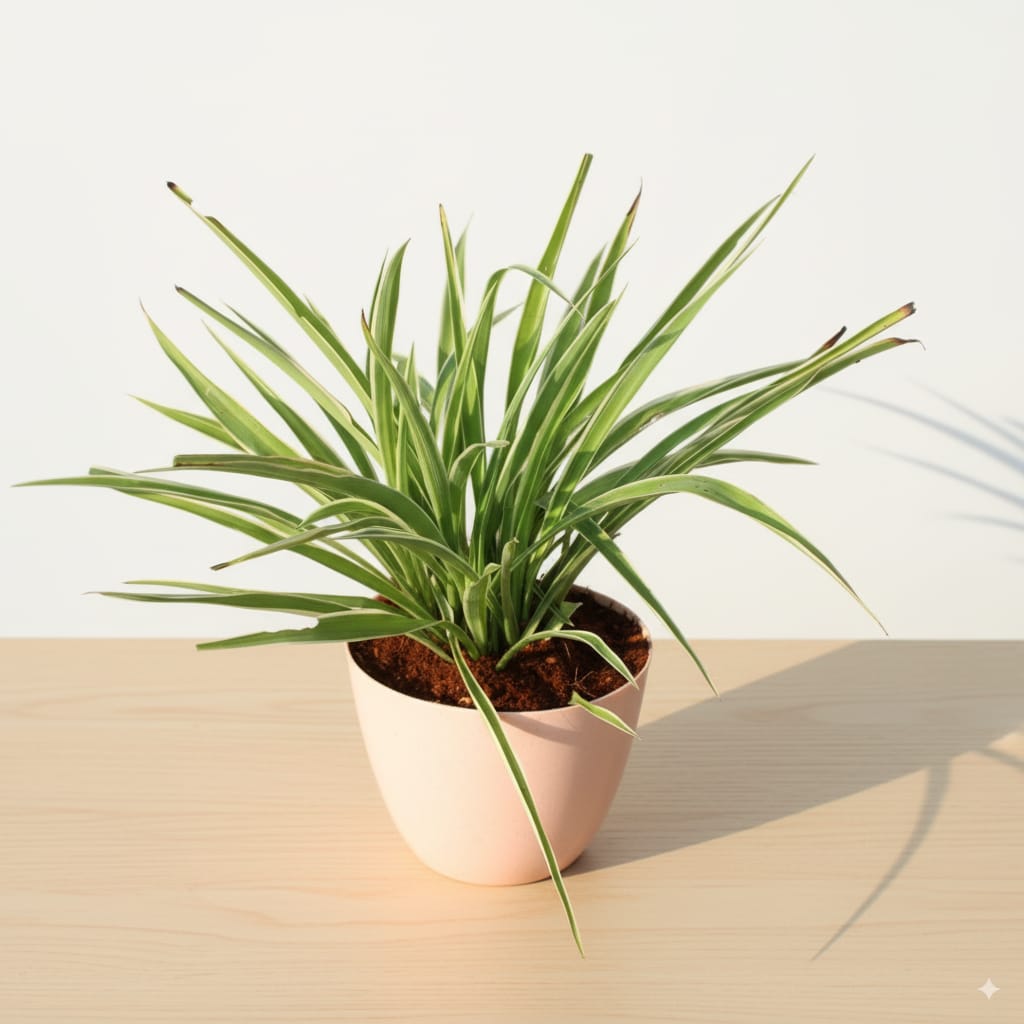
Spider Plant In 4 Inch Pink Orchid Round Plastic Pot
Spider Plant In 4 Inch Pink Orchid Round Plastic Pot
Regular price
Rs. 79.00
Regular price
Rs. 249.00
Sale price
Rs. 79.00
Unit price
/
per
Shipping calculated at checkout.
Couldn't load pickup availability
The spider plant (Chlorophytum comosum) is a popular and resilient houseplant known for its arching foliage and "spiderettes," or plantlets, that grow from long, trailing stems. It is native to tropical and southern Africa and is easy to grow, making it an excellent choice for beginners.
Key characteristics
- Appearance: Leaves are long, slender, and arch gracefully from a central rosette. Varieties often have green leaves with a white or cream stripe, either down the middle ('Vittatum') or on the edges ('Variegatum').
- Spiderettes: Mature plants produce small white flowers on long stems, which then develop into tiny, new plantlets. These offshoots can be easily propagated to create new plants.
- Roots: The plant has thick, fleshy, tuberous roots that store water, helping it to tolerate inconsistent watering and brief periods of drought.
- Toxicity: Spider plants are generally non-toxic to humans and pets, though large quantities can cause mild stomach upset in cats.
Benefits
- Air purification: Spider plants were included in NASA's Clean Air Study, where they were shown to help remove toxins such as formaldehyde and xylene from enclosed spaces.
- Aesthetic appeal: Their graceful, arching foliage makes them perfect for hanging baskets and decorative pots.
- Mood and well-being: As with many indoor plants, having a spider plant can help reduce stress and improve overall mood.
Care and maintenance
- Light: Prefers bright, indirect light. Direct sunlight can scorch the leaves and cause brown tips. The plant can tolerate lower light, but its growth may slow, and variegation may fade.
- Watering: Water when the top inch or two of soil feels dry. The soil should be kept moist but not soggy to prevent root rot. The fleshy roots make the plant somewhat drought-tolerant.
- Soil: Use a well-draining potting mix. A standard houseplant mix with good aeration works well.
- Temperature and humidity: Thrives in average household temperatures between 65–75°F (18–24°C). Avoid temperatures below 50°F (10°C) and protect the plant from cold drafts. It enjoys moderate humidity, so misting occasionally can be beneficial.
- Fertilizing: Feed monthly during the active growing season (spring and summer) with a water-soluble fertilizer at half strength. Over-fertilizing can lead to brown leaf tips.
- Brown tips: This common issue can be caused by low humidity, excessively dry soil, or a buildup of salts from treated tap water. Using distilled or filtered water may help prevent it.
Share
No reviews