
Eazy Garden
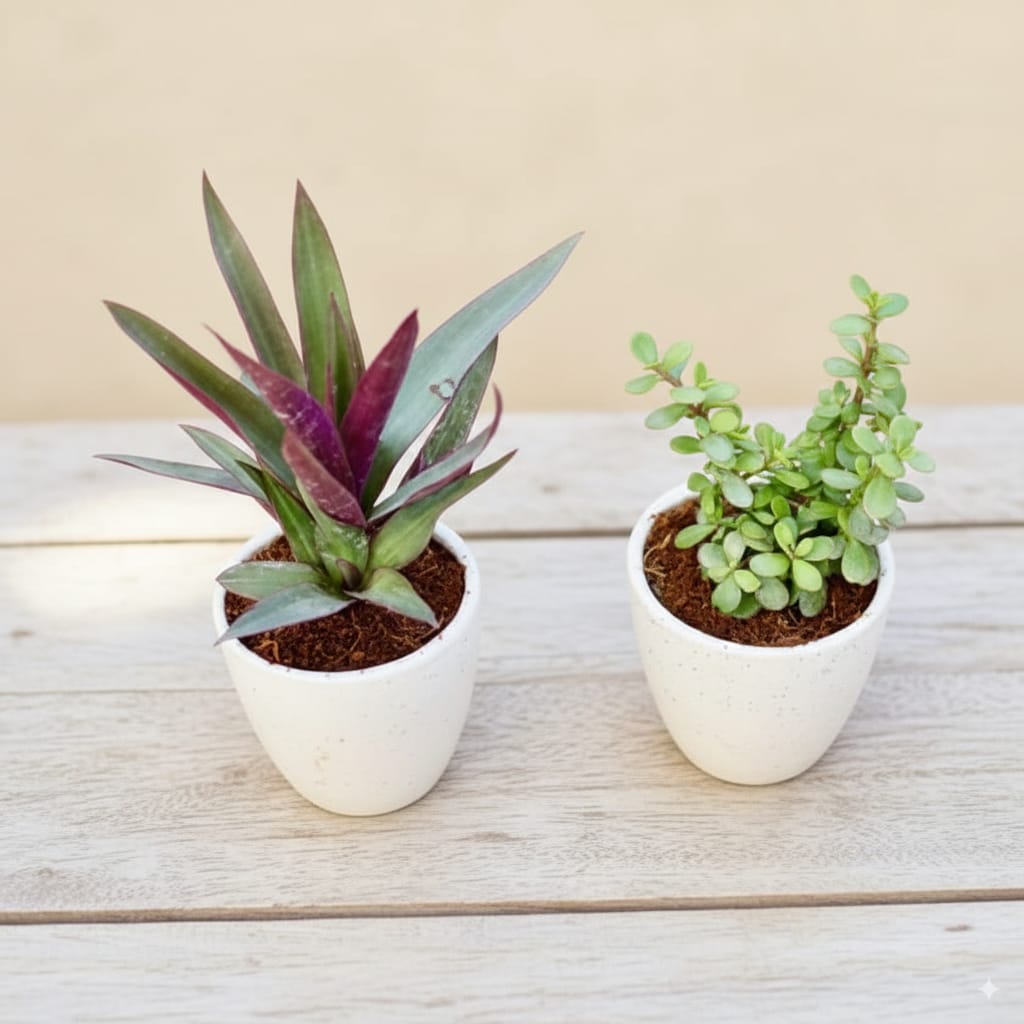
Set of 2 Rhoeo / Durangi and Jade Plant in 4 inch Classy Cup Ceramic Pot
Set of 2 Rhoeo / Durangi and Jade Plant in 4 inch Classy Cup Ceramic Pot
Couldn't load pickup availability
The term "Rhoeo durangi" is a common name for the Rhoeo plant, also known as Tradescantia spathacea. It is a low-maintenance, ornamental plant with striking foliage that is a popular choice for both indoor and outdoor settings.
characteristics
Foliage: The plant features sword-shaped leaves with a vibrant, two-toned color combination. The top surface of the leaves is typically green, while the underside is a rich purple or magenta. Variegated varieties with green, white, and pink stripes are also available.
Growth habit: Rhoeo is a clumping, evergreen perennial with a compact and bushy growth habit. The leaves grow in a spiral rosette pattern around a short stem.
Flowers: The plant produces small, white, three-petaled flowers that are nestled within boat-shaped purple bracts, giving it the common names "Moses-in-the-cradle" or "oyster plant".
benefits
Aesthetic appeal: With its striking green and purple foliage, the rhoeo plant is a popular decorative plant that can add a splash of color to any indoor space or garden.
Low maintenance: This plant is very easy to care for, making it an excellent choice for beginners or busy individuals. It can tolerate a range of conditions, including low light and drought.
Air purification: As a natural air purifier, it helps remove harmful pollutants from indoor air and produces oxygen.
Natural humidifier: The plant releases moisture through transpiration, helping to regulate indoor humidity levels in dry environments.
Versatile planting: Rhoeo can be grown indoors in pots or outdoors as a fast-growing ground cover in warm climates.
Care requirements
Light: Rhoeo prefers bright, indirect light but can tolerate partial shade. In too much direct sun, the leaves can scorch, while in low light, the purple coloration may fade.
Water: Allow the soil to dry out between waterings. These plants are drought-tolerant and susceptible to root rot if overwatered.
Soil: Use a well-draining potting mix that is rich in organic content.
About Jade Plant
The jade plant also known as the money plant or friendship tree, is a popular, easy-to-grow succulent with a tree-like appearance. Native to South Africa and Mozambique, its glossy, oval-shaped leaves and thick stems resemble miniature trees.
Care and growing tips
- Light: Jade plants require plenty of bright, indirect light to thrive, about four to six hours per day.
- Not enough light: A jade plant that becomes leggy and stretched is likely not getting enough sunlight.
- Too much light: Intense, direct sun can cause the leaves to scorch or develop red edges.
- Watering: Overwatering is the most common way to kill a jade plant, as it can lead to root rot.
- Water thoroughly but infrequently. Wait until the top inch or two of soil is completely dry before watering again.
- Watering frequency will be higher during the spring and summer growing season and much lower during the dormant winter months.
- Wrinkled or shriveled leaves indicate the plant needs more water.
- Soil: Use a well-draining soil mix designed for succulents or cacti, which prevents water from pooling around the roots.
- Pot: A pot with drainage holes is crucial. A terracotta or unglazed clay pot is ideal because its porous nature helps to draw excess moisture from the soil.
- Temperature: Jade plants thrive in average household temperatures between 65°F and 75°F (18°C and 24°C). They are not frost-tolerant and should be brought indoors during cold weather.
- Fertilizer: Feed mature plants sparingly during the active growing season (spring and summer) with a balanced, diluted liquid fertilizer.
- Pruning: You can prune your jade plant to maintain its shape or to encourage a bushier appearance. The cuttings can be used for propagation.
Cultural significance
In many cultures, the jade plant is considered a symbol of good luck, prosperity, and financial success.
- Its round, plump leaves are said to resemble coins, representing wealth and good fortune.
- According to Feng Shui, placing a jade plant in the southeast corner of a home or office can attract positive energy and prosperity.
- It is a traditional gift for new businesses or as a housewarming present.
Share