Your journey begins at ₹299 — place a minimum order of ₹299 to proceed.

1
/
of
1
Eazy Garden
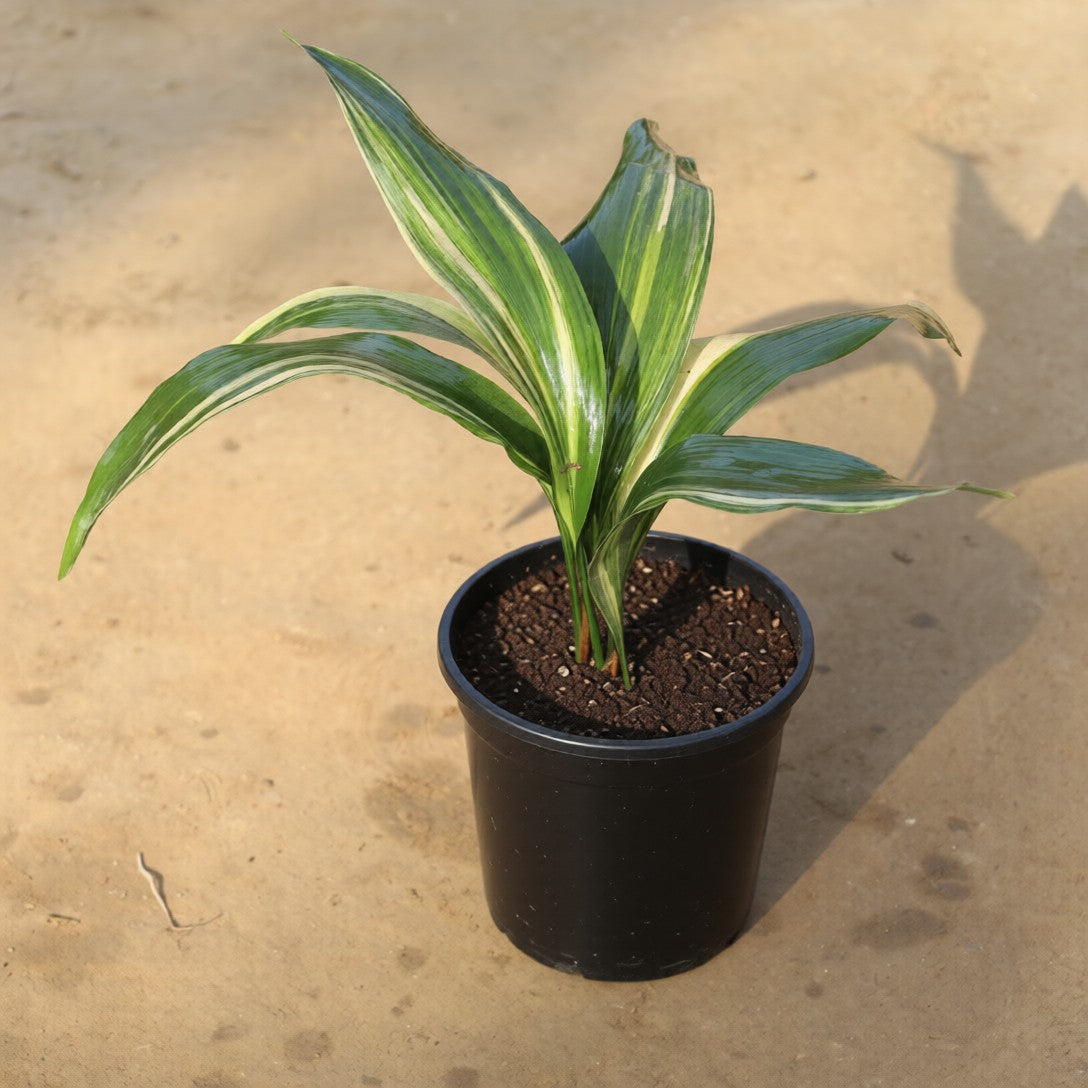
Rare Variegated Aspidistra (Cast Iron) Plant in 6 Inch Nursery Pot
Rare Variegated Aspidistra (Cast Iron) Plant in 6 Inch Nursery Pot
Regular price
Rs. 249.00
Regular price
Rs. 599.00
Sale price
Rs. 249.00
Unit price
/
per
Shipping calculated at checkout.
Couldn't load pickup availability
The variegated aspidistra, or Variegated Cast Iron Plant (Aspidistra elatior 'Variegata'), is a popular, low-maintenance houseplant known for its resilience and air-purifying qualities. Its care is simple, making it ideal for beginners, provided you avoid overwatering and direct sunlight.
Benefits of the Variegated Aspidistra
- Exceptional Resilience and Low Maintenance: Earning its nickname "Cast Iron Plant," it can survive conditions that would kill many other houseplants, including low light, low humidity, fluctuating temperatures, and occasional neglect. This makes it perfect for busy individuals or those new to plant care.
- Air Purification: It effectively filters common indoor air pollutants such as formaldehyde and benzene, contributing to a healthier living environment. Wiping the leaves occasionally to remove dust helps maximize this efficiency.
- Aesthetic Appeal: The striking green leaves with creamy white or yellow stripes add visual interest and a lush, tropical look to dim corners or shaded garden areas.
- Pet-Friendly: Good news for pet owners: the plant is non-toxic to humans, dogs, and cats.
- Longevity: With basic care, this slow-growing plant can live for many years, becoming a long-lasting feature in your home.
- Stress Relief: The presence of the plant can contribute to a calm and soothing environment, which may help reduce stress and anxiety.
Care Guide for the Variegated Aspidistra
- Light: Prefers low to moderate indirect light. Direct sunlight can scorch the leaves and cause the white variegation to fade or burn. A north-facing window or a shaded corner is ideal.
- Watering: Allow the soil to dry out slightly between waterings. Overwatering is the most common mistake and can lead to root rot. Water deeply but infrequently; reduce watering in the winter months.
- Soil: Use a well-draining potting mix. A blend of standard potting soil with perlite or organic matter works well to ensure proper drainage.
- Temperature & Humidity: It tolerates a wide range of typical indoor temperatures (ideally between 60–75°F or 15–24°C) and average home humidity. It is important to protect it from cold drafts or temperature extremes.
- Fertilization: Feed sparingly with a balanced liquid fertilizer diluted to half strength, once every 4–6 weeks during the growing season (spring and summer). Avoid over-fertilizing, as this can cause brown leaf tips.
- Pruning & Maintenance: Pruning is minimal; simply remove any yellowed or damaged leaves at the base to keep the plant tidy. Wipe the large leaves occasionally with a damp cloth to prevent dust accumulation, which helps with light absorption and appearance.
- Repotting: This plant is a slow grower and prefers to be somewhat root-bound. Repot only every 3-4 years in spring, using a container that is only slightly larger than the current one.
Share
No reviews