Your journey begins at ₹299 — place a minimum order of ₹299 to proceed.

1
/
of
1
Eazy Garden
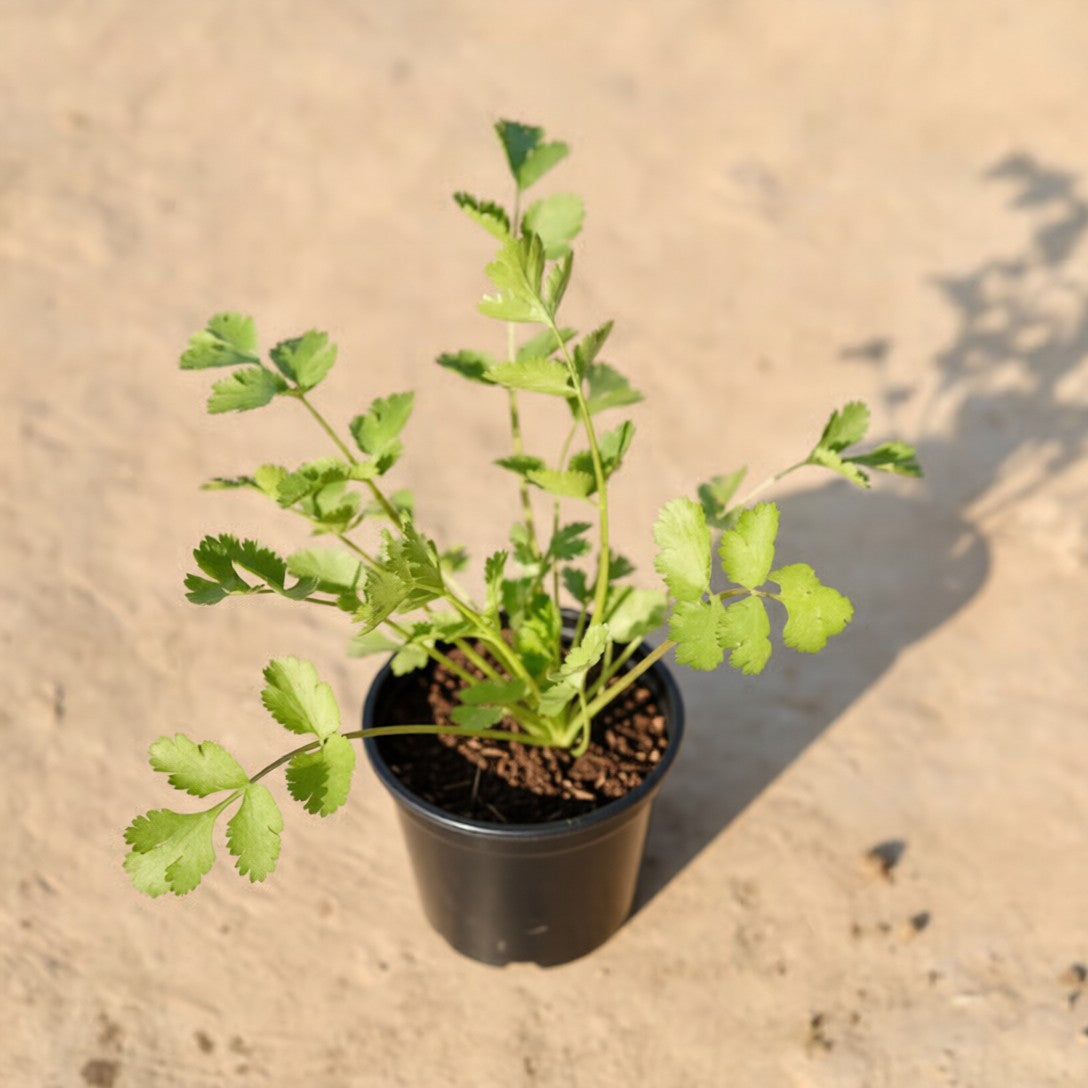
Dhaniya / Coriander Green in 4 Inch Nursery Pot
Dhaniya / Coriander Green in 4 Inch Nursery Pot
Regular price
Rs. 39.00
Regular price
Rs. 150.00
Sale price
Rs. 39.00
Unit price
/
per
Shipping calculated at checkout.
Couldn't load pickup availability
Growing Dhaniya (Coriander/Cilantro) in your home garden is highly rewarding, offering both a culinary staple and a powerhouse of health benefits. Because it is prone to "bolting" (flowering and going to seed prematurely), successful care focuses on maintaining cool conditions and steady moisture.
Health & Garden Benefits
- Nutrient-Dense: Fresh leaves are rich in Vitamins A, C, and K, along with minerals like iron, potassium, and magnesium.
- Digestive & Heart Health: It aids digestion by stimulating enzymes, helps lower bad (LDL) cholesterol, and acts as a mild diuretic to regulate blood pressure.
- Natural Detoxifier: Known for its "chelating" properties, it may help the body eliminate heavy metals like lead and mercury.
- Pest Protection: In the garden, its strong scent repels aphids, spider mites, and potato beetles, while its flowers attract beneficial pollinators like hoverflies and lacewings.
Essential Care Guide
- Seed Preparation: Gently crush the round husks to split them into two individual seeds; soaking them overnight in water can speed up germination.
- Direct Sowing: Dhaniya has a deep taproot and does not transplant well. Sow seeds directly in their final spot.
- Soil Type: Use well-draining, fertile soil with a pH between 6.2 and 6.8. Mix in compost or well-rotted manure before planting.
- Ideal Climate: It thrives in cool weather (17°C–27°C). In tropical regions like India, it grows best from October to February.
- Sunlight: Requires 4–6 hours of sun daily. In hot weather, provide afternoon shade to prevent the plant from bolting.
- Moisture: Keep the soil consistently moist but never waterlogged. Dry soil is the most common trigger for the plant to stop producing leaves and start flowering.
- Fertiliser: It is a light feeder. A balanced liquid organic fertiliser every 2–4 weeks is sufficient. Avoid high-nitrogen fertilisers, which can reduce the leaves' flavour.
Harvesting
- Succession Planting: Sow a new batch of seeds every 2–3 weeks to ensure a continuous supply, as individual plants have a short lifespan.
- Harvesting Technique: Start harvesting when the plant is 6 inches tall. Snip the outer leaves from the base, leaving the inner ones to keep growing.
- Preventing Bolting: Regularly pinch off any flower buds as they appear to extend the leaf-producing phase.
Share
No reviews