Your journey begins at ₹299 — place a minimum order of ₹299 to proceed.

1
/
of
1
Eazy Garden
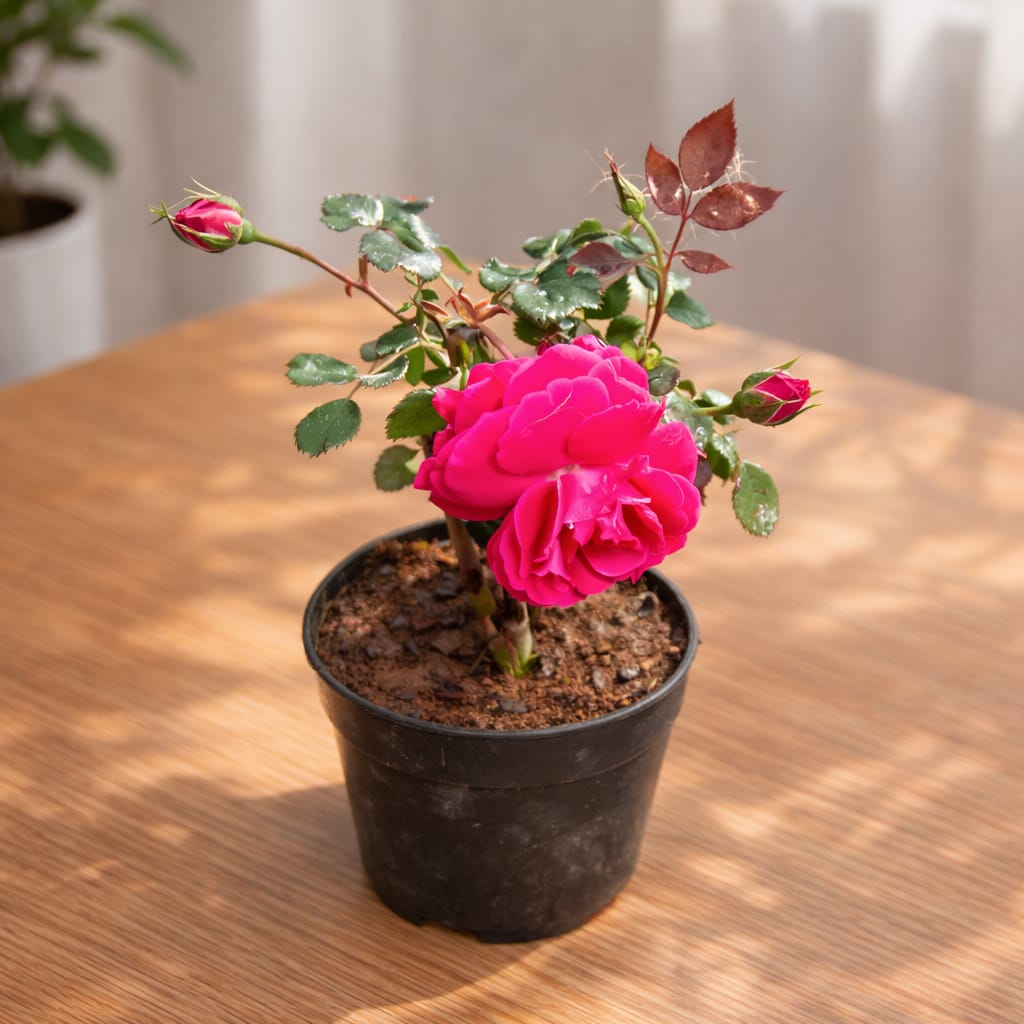
Desi Rose / Gulab ( Any Colour) in 6 inch Nursery Pot
Desi Rose / Gulab ( Any Colour) in 6 inch Nursery Pot
Regular price
Rs. 99.00
Regular price
Rs. 299.00
Sale price
Rs. 99.00
Unit price
/
per
Shipping calculated at checkout.
Couldn't load pickup availability
Desi Rose, also known as Desi Gulab or the Indian Heritage Rose, refers to native or traditional rose varieties (primarily Rosa indica or Rosa moschata) that are deeply rooted in South Asian culture. Unlike modern hybrid "English" roses, they are prized for their intense, natural fragrance rather than just their size or appearance.
Key Characteristics
- Intense Fragrance: Their most defining feature is a strong, sweet, and intoxicating aroma that can often be smelled from a distance.
- Edible Petals: The petals are soft, delicate, and safe for consumption. They are commonly used to make Gulkand (a sweet preserve), rose water (Gulab Jal), and rose tea.
- Hardy Nature: These roses are well-adapted to the Indian climate, being heat-tolerant and more resilient to local pests and diseases than many hybrid varieties.
- Appearance: They typically grow as bushy shrubs (2–4 feet tall) with glossy green foliage. Flowers can be single or double-layered and come in shades of vibrant red, pink, and white.
Uses and Benefits
- Cultural & Religious: They are the primary flowers used for temple offerings (naivedya), making garlands, and as confetti at weddings.
- Ayurvedic Medicine: In Ayurveda, they are known for their cooling properties (Sita) and are used to treat skin issues, aid digestion, and reduce stress.
- Commercial Production: Desi roses are harvested on a large scale for the extraction of high-quality rose oil (Attar or Rooh-e-Gulab) used in luxury perfumery.
Care Guide
- Sunlight: Requires 6+ hours of direct sunlight daily for best blooming.
Watering: Water regularly (deeply but infrequently); allow the topsoil to dry before re-watering.
Soil: Prefers well-draining, fertile loamy soil enriched with organic compost or cow dung manure.
Pruning: Best pruned in late winter or after major flowering seasons (June and December) to encourage new growth
Share
No reviews