Your journey begins at ₹299 — place a minimum order of ₹299 to proceed.

1
/
of
1
Eazy Garden
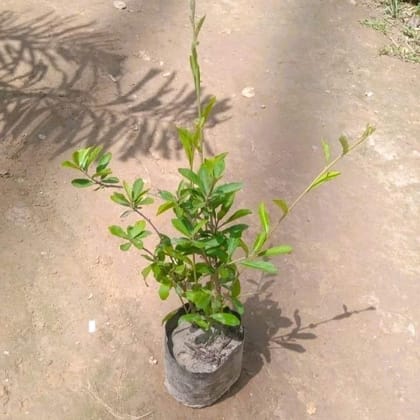
Curtain Creeper / Parda Bel / Vernonia in 4 Inch Nursery Bag
Curtain Creeper / Parda Bel / Vernonia in 4 Inch Nursery Bag
Regular price
Rs. 39.00
Regular price
Rs. 149.00
Sale price
Rs. 39.00
Unit price
/
per
Shipping calculated at checkout.
Couldn't load pickup availability
The curtain creeper is a fast-growing, low-maintenance evergreen vine known for its lush, cascading foliage that creates a thick, curtain-like covering over walls, fences, and balconies. Its scientific name is Tarlmounia elliptica, but it is also widely referred to by its former name, Vernonia elaeagnifolia, and by the common name Parda Bel.
Appearance and features
- Foliage: The main feature of this vine is its beautiful foliage. Its stems grow upward along a support structure and then drape down elegantly, forming a dense green curtain. The leaves are typically oblong to elliptic in shape.
- Flowers: While prized for its leaves, the curtain creeper does produce small, inconspicuous whitish or light yellow flowers, especially during the growing season.
- Growth habit: It is a perennial climber that requires a trellis, wall, or other structure to grow on. The plant can reach a maximum height of 8 to 10 meters with proper support.
Growing conditions and care
- Sunlight: The curtain creeper needs at least 3 to 6 hours of direct morning sunlight for optimal growth, but it can also tolerate partial shade.
- Soil: It thrives in well-drained, fertile soil that is rich in organic matter. A slightly acidic soil pH (6.0–7.5) is ideal.
- Watering: Water the plant when the top 1–2 inches of soil feel dry to the touch. It is somewhat drought-tolerant once established but performs best with regular watering, especially during summer. Avoid overwatering to prevent root rot.
- Fertilizer: Fertilize monthly during the growing season (spring and summer) with a balanced, organic fertilizer like compost tea or fish emulsion. Reduce feeding during winter.
- Pruning: Regular pruning is necessary to maintain its shape and control its size. It also encourages bushier, denser growth. Prune away dead or damaged branches at any time.
- Propagation: The plant is easily propagated from stem cuttings. Take a healthy cutting and plant it in a rooting medium until new roots develop.
- Pests and diseases: It is naturally resistant to most pests and diseases, making it a "zero-maintenance" option for gardeners.
Uses and benefits
- Privacy screen: The dense foliage makes it an excellent choice for creating a natural, green privacy screen for balconies, fences, and walls.
- Ornamental value: It adds a touch of natural elegance to outdoor spaces and is often used for vertical gardens and topiary designs.
- Attracts pollinators: The flowers attract beneficial pollinators like bees and butterflies, contributing to the biodiversity of your garden.
- Air purification: Like many plants, it helps purify the air and can create a healthier outdoor environment.
- Natural insulation: When grown over walls, it can help reduce heat absorption, cooling the surrounding area.
Share
No reviews